
Does Organic Really Matter??
Or is it all BS?

Here’s the thing about buying and eating organic: it can be expensive, time-consuming to source, and then you begin to wonder, how do they get chickens to be organic anyway?? So then if you are like me, you start to wonder, is it really worth it? So you get into the weeds on it and do your research, only to find there are a lot of naysayers and a lot of conflicting information.
So, let me simplify it for you. Yes, organic matters, but no, you don’t need to buy everything organic. There’s a practical middle path, and once you’ve found it, analysis paralysis fades and grocery shopping feels a whole lot easier.
Why Organic?
We all know that conventionally grown produce is routinely treated in the fields. According to the Environmental Working Group’s (EWG) 2026 Shopper’ Guide – which analyzes USDA data on more than 47 fruits and vegetables – nearly 75% of non-organic fresh produce sold in the U.S. contains residues of potentially harmful pesticides. Insecticides, herbicides, and fungicides don’t sound very appetizing – and unfortunately, their residues don’t just disappear at the grocery store.
The research confirms it: multiple intervention studies, including a University of California, Berkley study published in Environmental Health Perspectives and a separate cluster-randomized crossover trial, found that switching to an organic diet rapidly reduced pesticide biomarkers, and, over time, lowered biomarkers of oxidative stress and inflammation. The takeaway? Swapping to organic shows up quickly.
When It’s a Must: The Dirty Dozen
The EWG’s Dirty Dozen list is a great resource. It cuts right to the chase and names the 12 conventionally grown fruits and veggies with the highest pesticide residues. These make up your must-buy-organic list. If budget or availability means you have to pick and choose, prioritize these.
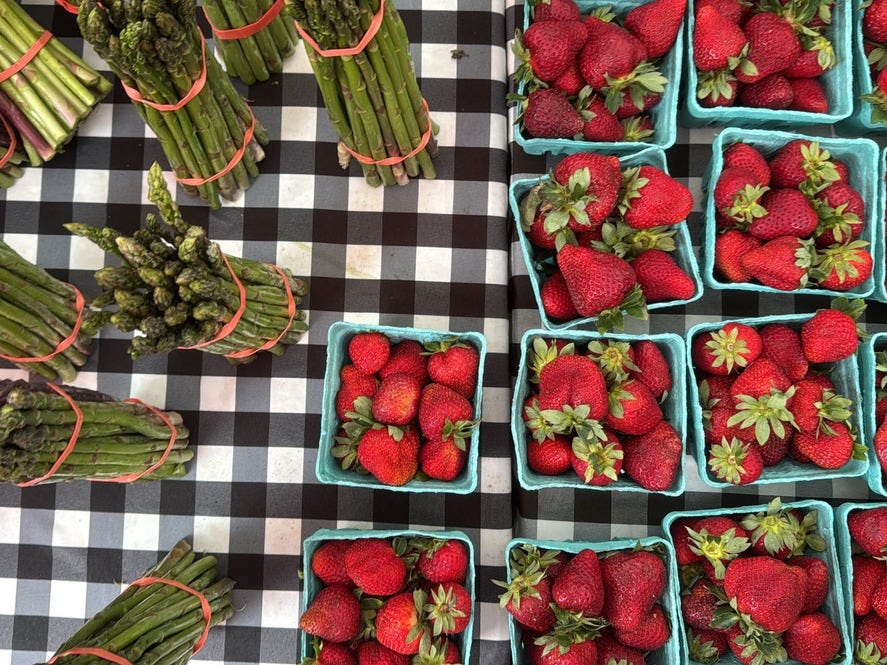
EWG’s 2026 Dirty Dozen: Spinach, Strawberries, Kale, Collard and Mustard Greens, Peaches, Grapes, Nectarines, Apples, Bell and Hot Peppers, Blueberries, Green Beans, Cherries, Blackberries.
CLC Note: As summer nears and produce becomes more abundant, many of these – like berries, peaches, and apples – are things most of us reach for daily. Whatever you love from this list, make it an automatic organic buy.Also worth knowing: frozen organic produce is often significantly cheaper than fresh, and just as nutritious – sometimes more so, since it’s frozen at peak ripeness. A great option when fresh isn’t available or the price isn’t right.
And you’ll notice that spinach and kale – two of our blood-sugar balancing favorites from last week – sit right at the top of this list. Make them a daily habit, but make sure you’re buying them organic.
When Conventional is Fine: The Clean Fifteen
The EWG’s Clean Fifteen identifies the 15 produce items with the lowest pesticide residues. Almost 60% of these tested with no detectable pesticide residue at all – meaning you can buy these conventionally without much concern (and put your organic budget where it counts).
EWG’s 2026 Clean Fifteen: Pineapples, Sweet Corn, Avocados, Onions, Papaya, Cabbage, Asparagus, Mangos, Watermelon, Kiwi, Honeydew Melon, Mushrooms, Sweet Peas (frozen), Carrots, Bananas
Thick-skinned or outer-peeled produce tends to fare best – the pesticide has a harder time making it through to the part you eat.
CLC Note: If you follow us on Instagram, you’ll find us chronicling our weekend visits to DC-area farmers markets. Many small farms use organic methods but haven’t pursued certification because of the cost -- meaning you might be getting organic quality without the organic price tag. It’s always worth asking.
Beyond Produce: The Other Organic Non-Negotiables
Organic isn’t just a produce conversation. A few other places where it genuinely matters:
Whole Grains and Oats: Organic is key here. When you choose organic grains and oats, you’re avoiding pesticides while preserving the natural fiber, vitamins, and minerals that make whole grains worth eating in the first place. Glyphosate – the active ingredient in a well-known weed killer – is sometimes used as a pre-harvest drying agent on conventional oats, and residues have been detected in finished oat products. Yikes. This is one place to spend the extra $$. Check out last week’s post for a few of our favorite brands.
Dairy and Eggs: Organic dairy and eggs come from animals raised without synthetic hormones or routine antibiotics, and on organic feed. If these are regulars in your household, organic is worth prioritizing. For eggs, I really try to buy local pasture-raised at farmer’s market, but if I buy in the store, I look for the organic, pasture-raised label.

The Middle Path To Take
Buying everything organic all the time is not possible for most of us – and that’s okay. Here’s the bottom line:
Organic Always: anything on the Dirty Dozen, whole grains, oats, dairy, and eggs.
Organic When Available: everything else on your rotation.
Conventional is Fine: anything on the Clean Fifteen.
Are there foods on these lists that surprise you? Drop a comment below, we’d love to hear from you.
And if you are in DC, Order our locally sourced meals at CLC Meals **And check out one of our favorite local farms, Area2Farms for organic produce delivered to your door.
Sources: Environmental Working Group Shopper’s Guide to Pesticides in Produce (2026); UC Berkeley / Environmental Health Perspectives, organic diet intervention study; cluster-randomized crossover trial on organic diet and oxidative stress biomarkers, PubMed.